
Table of contents
As a neurosurgeon in PCMC, I often meet patients who are confused about the source of their pain. Many people continue living with discomfort for months, thinking it will go away on its own. However, certain signs can indicate that the pain may be coming from the spine and needs medical attention.
Back pain is one of the most common health issues people experience today. Many people assume it happens only because of muscle strain, long working hours, or poor posture. While these reasons are quite common, sometimes the real cause of back pain can be related to the spine. Understanding the difference between simple back pain and spine-related pain is very important so that proper care can be taken at the right time.
Understanding the Spine and Its Role
The spine is a very important part of the body. It supports our posture, helps us stand, sit, walk, and protects the spinal cord. The spinal cord carries signals between the brain and the rest of the body. Because of this connection, any problem in the spine can sometimes affect other areas like the legs, arms, or neck.
The spine is made up of small bones called vertebrae. Between these bones are discs that act like cushions and help in smooth movement. There are also nerves that pass through the spine. When these nerves get compressed or irritated, they can cause different types of symptoms.
When Back Pain May Be Related to the Spine
Not every back pain is caused by a spine problem. In many cases, muscle strain or poor posture can lead to temporary discomfort. However, there are certain symptoms that may suggest the pain is connected to the spine.
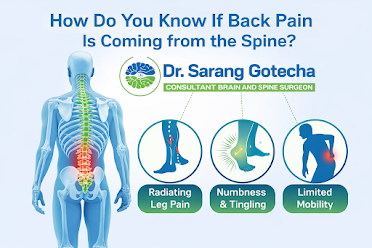
One common sign is pain that travels from the lower back down to the leg. This type of pain is often linked to irritation or pressure on a spinal nerve. Some people also experience numbness, tingling, or weakness in the leg along with back pain.
Another sign is pain that increases while standing or walking for a long time. People may feel relief when they sit down or bend slightly forward. This type of pain can sometimes be related to nerve pressure in the lower spine.
If you notice that your back pain is not limited to one area and is affecting movement, balance, or strength, it is better to get it checked.
Symptoms That Should Not Be Ignored
Back pain can show different symptoms depending on the cause. Some symptoms may indicate that the spine needs medical attention.
Pain that travels to the leg is one of the most common warning signs. This condition is sometimes linked with nerve irritation in the spine.
Numbness or tingling in the legs or feet can also suggest that a nerve may be affected. Some people describe it as a “pins and needles” feeling.
Weakness in the leg or difficulty lifting the foot while walking can also be a sign of nerve involvement. In such cases, a medical check-up is important.
Persistent pain that does not improve with rest is another reason to seek medical advice.
Common Spine-Related Causes of Back Pain
Several conditions related to the spine can cause back pain. One common cause is a slipped disc, where the cushion between the spinal bones moves out of place and presses on a nerve.
Another condition is spinal stenosis, where the space around the spinal cord becomes narrow and puts pressure on the nerves.
Degenerative changes in the spine can also lead to discomfort, especially as people grow older.
In some cases, injuries, poor posture, or long hours of sitting can slowly affect the spine and lead to ongoing pain.
Importance of Early Evaluation
Many people ignore back pain until it becomes severe. However, early evaluation can help identify the cause and prevent the problem from becoming worse.
A doctor may suggest a physical examination to understand how the spine is functioning. In some cases, imaging tests such as an X-ray or MRI may be recommended to look at the spine more closely.
Early diagnosis allows proper guidance on treatment, lifestyle changes, and exercises that can help reduce pain and improve movement.
Simple Steps to Support Spine Health
While some spine problems require medical care, there are simple habits that can help protect the spine in everyday life.
Maintaining good posture while sitting and working is very important. Using proper back support and avoiding long hours in one position can help reduce strain on the spine.
Regular physical activity helps keep the muscles around the spine strong and flexible.
Lifting heavy objects carefully and bending the knees instead of the back can also help prevent injury.
Taking breaks during long periods of sitting or standing can help reduce stress on the spine.
When to Seek Medical Advice
Back pain that lasts for a few days may improve with rest and simple care. However, if the pain continues for weeks or begins to affect daily activities, it is better to consult a specialist.
Pain that spreads to the leg, causes numbness, tingling, or weakness should not be ignored. These symptoms may indicate nerve involvement and need proper evaluation.
A timely consultation can help identify the cause of the problem and guide the next steps for care.
Final Thoughts
Back pain is very common, but it should never be ignored when it starts affecting daily life. Sometimes the cause may be simple muscle strain, while in other cases it may be related to the spine.
Recognizing early signs such as pain traveling to the leg, numbness, tingling, or weakness can help in seeking timely medical advice. A proper check-up can help understand the reason for the pain and guide the right treatment plan.
If you are experiencing persistent back pain, it is always wise to get it evaluated. Early attention to spine health can help prevent complications and support a more comfortable and active life.
About Dr
Dr. Sarang Gotecha is a leading brain & spine surgeon in Pune, offering advanced care for complex neurological and spinal conditions. With strong academic credentials (MBBS, MS, MCh Neurosurgery) and years of surgical experience, he is committed to delivering precise, safe, and patient-focused treatments.
Back pain can be caused by muscle strain, poor posture, or spine problems. It’s important to know the difference between muscle pain and spine-related pain.
If your pain travels to your legs, causes numbness, tingling, or weakness, it might be from the spine and should be checked by a doctor.
If your back pain lasts for more than a few days, spreads to your legs, or makes daily activities difficult, it’s time to consult a doctor.
Maintain good posture, take breaks from sitting, exercise regularly, and lift heavy things carefully to help protect your spine.

Dr. Sarang Gotecha
Dr. Sarang Gotecha is a leading brain & spine surgeon in Pune, offering advanced care for complex neurological and spinal conditions. With strong academic credentials (MBBS, MS, MCh Neurosurgery) and years of surgical experience, he is committed to delivering precise, safe, and patient-focused treatments.
- Expert in brain tumor, spine & neuroendoscopic surgeries
- Specialized in minimally invasive & skull base surgeries
- Follows an ethical and patient-centric approach
- Available at clinics in Baner, Wakad, and Thergaon (Pune)