
Table of contents
If you’ve ever spent a long day working on a laptop or scrolling through your phone, you might have noticed some discomfort. It could be a stiff neck, back pain, or even headaches. Over time, if we continue to maintain poor posture while using these devices, it can lead to more serious spine-related problems. Let’s take a look at how screen time affects your spine and what you can do to avoid long-term damage.
In today’s world, we spend a lot of time staring at screens—whether on our phones, laptops, or TVs. While these devices have become a necessary part of life, the long hours we spend using them can slowly take a toll on our health, especially on our spine. If you’ve been experiencing discomfort such as neck pain or back stiffness, it’s a good idea to consult a neurosurgeon in PCMC to get a proper diagnosis and avoid long-term spine problems.
The Link Between Screen Time and Spine Health
Spending hours sitting in front of a screen, especially when you’re slouching or hunched over, can create a lot of strain on your neck and back. Our spine is designed to maintain a natural curve, but when we sit in the wrong position, especially for prolonged periods, it can cause tension in the muscles and joints around the spine.
The most common issues related to excessive screen time include:
- Neck Pain: When you look down at your phone or bend forward while working on your laptop, the neck muscles are constantly stretched. This can lead to stiffness and pain.
- Back Pain: Sitting for long hours without support can put pressure on the lower back. Over time, this can result in chronic pain or discomfort.
- Headaches: Poor posture, combined with long screen time, can cause tension in the muscles around your neck and shoulders, leading to headaches.
What Happens If You Ignore the Warning Signs?
If you’re ignoring these aches and pains, they may seem like minor discomforts at first. However, over time, they can worsen. Chronic neck and back pain can develop into more serious problems such as herniated discs, nerve compression, or muscle imbalances. In some cases, this can even affect your ability to perform everyday activities. So, it’s important not to ignore any pain or discomfort you might be feeling, even if it seems minor.
When screen time continues unchecked, it’s not just your muscles that suffer. Prolonged bad posture can affect the discs in your spine, leading to degeneration and more serious spine conditions.
Dr. Sarang Gotecha, a spine surgeon at PCMC, is always here to offer expert advice and guidance on spine health. Don’t hesitate to reach out for help!
How to Prevent Spine Damage from Screen Time
The good news is there are simple steps you can take to prevent long-term damage. A few minor changes in how you use your devices can make a big difference in your spine health.
Here are some tips to help you avoid strain:
The good news is there are simple steps you can take to prevent long-term damage. A few minor changes in how you use your devices can make a big difference in your spine health.
1. Maintain Proper Posture
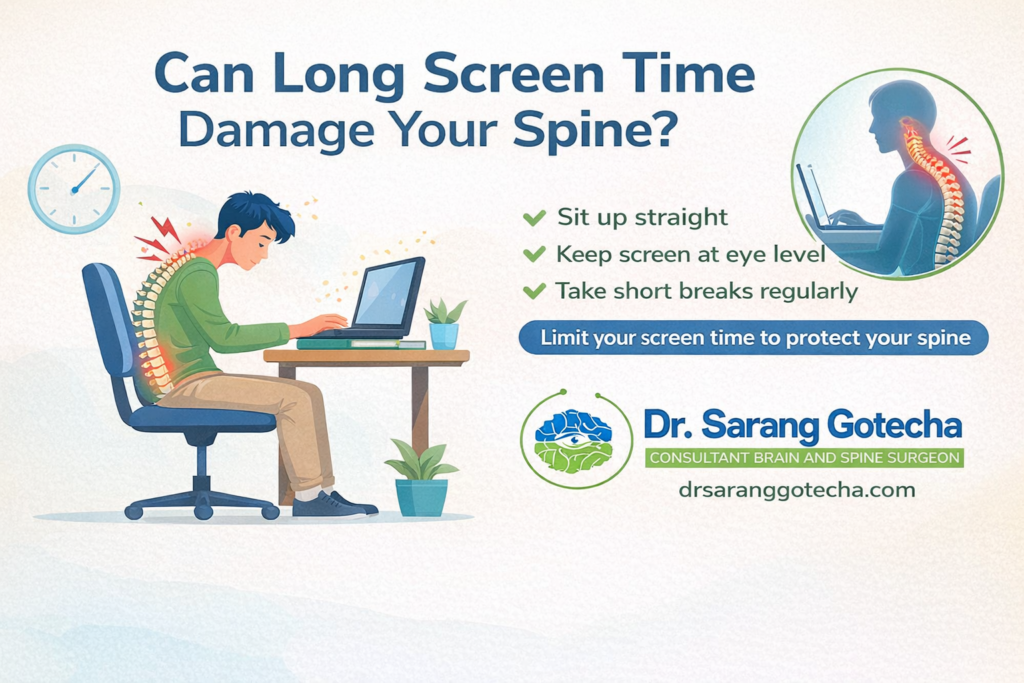
The most important thing you can do is sit up straight. This means aligning your head, neck, and spine in a neutral position. Avoid slouching or leaning forward when using your phone or laptop.
- Keep your feet flat on the floor, or use a footrest to support them.
- Your knees should be at 90 degrees when sitting.
- Make sure your back is supported with a chair that encourages good posture.
2. Position Your Screen Correctly
Your screen should be at eye level. This means you should not have to look down or strain your neck to see the screen. If you’re using a laptop, consider using a stand or raising it so the top of the screen is at eye level. This helps avoid bending your neck forward, which causes unnecessary strain.
3. Take Frequent Breaks
Even if you’re sitting with perfect posture, long periods of screen time can still affect your spine. It’s essential to take small breaks every 30 to 40 minutes. Stand up, walk around, and stretch. Doing this regularly will help reduce the strain on your back and neck.
4. Incorporate Stretching and Movement
A few minutes of stretching can work wonders for your muscles. Gentle neck stretches, back bends, and shoulder rolls can release the tension built up from sitting. If you’re sitting for a long time, try to move your body, even if it’s just a quick stretch, to keep your muscles flexible and relaxed.
5. Exercise Regularly
Engaging in regular physical activity is crucial for overall spine health. Exercise strengthens the muscles around your spine, making them better able to support your body. Activities like yoga, swimming, and walking can help reduce the risk of developing spine-related issues.
6. Adjust Your Work Environment
If you work from home, create a comfortable workstation. An ergonomic chair with good lumbar support and a desk at the right height can make a huge difference in your spine health. You can also use a separate keyboard and mouse instead of relying on a laptop’s built-in ones, which helps keep your arms and hands in a neutral position.
When to Seek Help
If you’re experiencing persistent neck or back pain, or if you’re starting to notice headaches that seem linked to your screen time, it’s important to consult a professional. A spine specialist or physiotherapist can help assess your posture and suggest appropriate exercises or treatments.
Sometimes, pain can be a sign of a deeper problem. Conditions like herniated discs, scoliosis, or spinal misalignment can occur due to poor posture over time. If you’re noticing consistent discomfort, don’t hesitate to speak to a professional, such as a spine surgeon, for further advice.
Conclusion
Screen time has become an inevitable part of our daily lives, but it’s important to recognize that excessive screen time can negatively affect your spine health. By maintaining good posture, taking regular breaks, and incorporating stretching into your daily routine, you can protect your spine and prevent long-term damage.
If you’re experiencing any discomfort, don’t ignore it—consult a spine surgeon or specialist who can help guide you on the best course of action to ensure your spine remains healthy for years to come. Taking small, consistent steps now can save you from more serious issues down the road.
Remember, your spine is the foundation of your body. Taking care of it today can help you avoid pain tomorrow.
Keep your spine straight, head level, and your screen at eye level to avoid straining your neck and back.
Ensure proper posture, take breaks every 30-40 minutes, and consider using an ergonomic chair.
If the pain persists, it’s important to consult a spine specialist to prevent serious conditions.
Regular exercise strengthens the muscles around your spine, reducing the risk of pain and injury from long screen time.

Dr. Sarang Gotecha
Dr. Sarang Gotecha is a leading brain & spine surgeon in Pune, offering advanced care for complex neurological and spinal conditions. With strong academic credentials (MBBS, MS, MCh Neurosurgery) and years of surgical experience, he is committed to delivering precise, safe, and patient-focused treatments.
- Expert in brain tumor, spine & neuroendoscopic surgeries
- Specialized in minimally invasive & skull base surgeries
- Follows an ethical and patient-centric approach
- Available at clinics in Baner, Wakad, and Thergaon (Pune)