
KEY TAKEAWAYS
- Dr. Sarang Gotecha is an MCh-qualified neurosurgeon with 19 years of total experience and over 10 years as a specialist in complex neurosurgery — one of the most experienced neurosurgeons serving the western Pune and PCMC population.
- His international fellowship training spans two of Asia’s most prestigious neurosurgical institutions: the National Neuroscience Institute, Singapore (WFNS fellowship) and St. Mary’s Hospital, Catholic University of Korea, Seoul (MISS fellowship).
- His subspecialty expertise covers the full breadth of neurosurgery: brain tumor surgery, skull base surgery, cerebrovascular surgery, minimally invasive spine surgery, neuroendoscopic surgery, transnasal pituitary surgery and traumatic brain injury management.
- What distinguishes his practice is the combination of international training, modern technology deployment (neuronavigation, IONM, 5-ALA, operating microscope) and a consultation philosophy built on honest, evidence-based communication.
- Patient outcomes across all subspecialties are consistent with published international benchmarks — GTR rates for accessible tumors over 90%, fusion rates for MISS spine over 95% and TN pain-free rates after MVD of 70 to 80% at 10 years.
- His practice serves patients from Pune, Baner, Wakad, Thergaon, Aundh, Sus, Hinjewadi and across PCMC — bringing world-class neurosurgical expertise to a population that previously had to travel to Mumbai for this level of care.
- Every consultation includes a full neurological examination, MRI review, honest outcome data and a clear explanation of all treatment options — surgical and non-surgical — before any recommendation is made.
Trust in a neurosurgeon is earned differently from trust in most professionals. It is built through the transparency of information provided before surgery, the honesty of outcome discussions that include realistic limitations alongside optimistic possibilities, the quality of technical execution and the consistency of post-operative support. It is also built through the experiences of patients who have been through the process and are willing to describe it.
This final blog in the 2026 content series is about all of those things. It is an honest account of who Dr. Sarang Gotecha is, what his training covers, what his clinical practice looks like and what patients from Pune and PCMC have experienced in his care. It is written as a navigational resource for new patients making one of the most important decisions of their lives — choosing a neurosurgeon.
QUICK FACTS
Total Experience: 19 years overall, 10+ years as neurosurgery specialist
International Fellowships: WFNS — National Neuroscience Institute Singapore; MISS — St. Mary’s Hospital Seoul
Subspecialties: Brain tumor, skull base, cerebrovascular, MISS spine, neuroendoscopic, pituitary, TBI
Qualifications: MBBS, MS General Surgery, MCh Neurosurgery
Practice Location: Baner-Wakad corridor — serving Pune and PCMC
Consultation Approach: Full neurological examination, MRI review, evidence-based options — surgical and non-surgical
The Credentials That Matter: What International Fellowship Training Means in Practice
Medical qualifications are necessary but not sufficient for complex neurosurgery. An MCh in Neurosurgery demonstrates the foundational training. What differentiates surgeons within the MCh qualification pool is subspecialty fellowship training at high-volume, internationally recognised centres.
Dr. Sarang Gotecha completed two such fellowships. The first — a fellowship in minimally invasive spine surgery at St. Mary’s Hospital, Catholic University of Korea, Seoul — provided direct training in MISS techniques: endoscopic discectomy, tubular retractor systems, MISS TLIF, percutaneous pedicle screw placement and endoscopic decompression for stenosis. Korea is among the world leaders in MISS technique development and St. Mary’s Hospital is one of its high-volume centres.
The second — a WFNS fellowship at National Neuroscience Institute, Singapore — provided training in the full breadth of complex neurosurgery: skull base surgery, cerebrovascular surgery, neuroendoscopic techniques, spinal cord tumors and paediatric neurosurgery. NNI Singapore operates at the highest volume and technical standard in Southeast Asia. The case diversity and surgical volume encountered during this fellowship directly translates to Dr. Gotecha’s ability to manage the full spectrum of complex neurosurgical cases presenting in Pune and PCMC.
DR. SARANG GOTECHA — CREDENTIALS AT A GLANCE
- MBBS — Foundation of medical qualification
- MS (General Surgery) — Surgical training foundation
- MCh (Neurosurgery) — Highest PG qualification in neurosurgery in India
- Fellowship in Minimally Invasive Spine Surgery — St. Mary’s Hospital, Catholic University of Korea, Seoul
- WFNS Fellowship — National Neuroscience Institute, Singapore
- NMC Registered — Verifiable at nmc.org.in
- 19 years total experience — 10+ years as neurosurgery specialist
- Trained in neuronavigation, operating microscope, IONM, neuroendoscopy, MISS techniques
The Full Subspecialty Breadth: Why It Matters for PCMC Patients
Neurosurgery is broad. A neurosurgeon who specialises only in spine surgery cannot manage a ruptured aneurysm at 2 AM. A surgeon who focuses only on brain tumors may not be the right person for a minimally invasive cervical disc herniation in an IT professional from Wakad. The breadth of Dr. Sarang Gotecha’s subspecialty training means that patients and families from PCMC have a single neurosurgeon who can manage the full clinical spectrum without a fragmented multi-specialist pathway.
| Subspecialty | Procedures | Training Background |
| Brain Tumor Surgery | Meningioma, glioma, metastasis, pituitary, acoustic neuroma | MCh + NNI Singapore fellowship |
| Skull Base Surgery | Petroclival, sphenoid wing, chordoma, craniopharyngioma, acoustic neuroma | NNI Singapore skull base programme |
| Cerebrovascular Surgery | Aneurysm clipping, AVM resection, cavernoma, EC-IC bypass | NNI Singapore cerebrovascular training |
| Minimally Invasive Spine Surgery | Endoscopic discectomy, MISS TLIF, MISS ACDF, percutaneous fixation | St. Mary’s Hospital Seoul MISS fellowship |
| Neuroendoscopic Surgery | ETV, endoscopic biopsy, colloid cyst, aqueductoplasty | NNI Singapore + MCh training |
| Transnasal Endoscopic Surgery | Pituitary adenoma, clivus tumors, CSF leak repair | NNI Singapore skull base programme |
| Traumatic Brain Injury | EDH/SDH evacuation, ICP monitoring, decompressive craniectomy | Comprehensive MCh + fellowship training |
| Spinal Trauma and Fracture | Posterior fixation, corpectomy, vertebroplasty, SCI decompression | MCh + MISS fellowship |
| Functional Neurosurgery | DBS for Parkinson’s, epilepsy surgery, MVD for TN | MCh + NNI Singapore training |
The Technology Standard: What Every Patient Gets
Credentials and training describe what a surgeon has learned. Technology describes what they deploy. The combination determines surgical safety and outcome in a specific case. Dr. Sarang Gotecha’s practice applies the following technologies as standard at hospitals in the Baner-Wakad corridor:
Neuronavigation is used for all brain tumor surgeries requiring precise targeting, all skull base approaches and all MISS spine procedures where implant trajectory planning adds safety. The operating microscope is standard for all intradural procedures, meningioma resections, skull base surgery and spinal cord tumor cases. Intraoperative neurophysiological monitoring (IONM) is deployed for all eloquent area brain surgeries, spinal cord tumor cases, posterior fossa surgery and complex cervical spine procedures.
5-ALA fluorescence-guided surgery is used for high-grade glioma resections at equipped Pune centres. Intraoperative fluoroscopy guides MISS spine procedures and percutaneous procedures. For complex vascular cases, intraoperative ICG angiography confirms bypass patency and aneurysm occlusion before wound closure.
Each technology has published evidence supporting its benefit to patient outcomes. Patients choosing a neurosurgeon in Pune should ask which of these technologies will be used in their specific procedure — and why.
Five Patient Outcomes That Reflect the Practice
Case 1: Convexity Meningioma – Wakad
A teacher aged 52 from Wakad was diagnosed with increasing right arm weakness over the course of 4 months. MRI revealed an 4.5 centimeter left convexity meningioma of the motor cortex. Neuronavigation using IONM-guided craniotomy was able to achieve Simpson Class I complete removal. She was neurologically healthy upon waking. After 8 weeks, she was back to teaching full time. After surgery, MRI after 6 weeks of treatment confirmed no tumors that had recurred. 5-year recurrence rates under 9 percent.
Case 2: L4-L5 disc Herniation due to Foot Drop Chinchwad
A software engineer aged 38 from Chinchwad suffered from an acute foot drop, following an injury to the sciatic nerve. MRI revealed a significant L4-L5 disc herniation with serious L5 nerve compression of the root. Microdiscectomy was performed by MISS within 48 hours after the onset of foot drop. He was able to walk without assistance on Day 1. Strength in the foot dorsiflexion area began to recover at the end of Week 3 and was graded as 4+ out of five at three months. He was back in his IT position after four weeks. The speedy surgical timing relative to the time of onset of the foot drop was a crucial aspect in regaining neurological function.
Case 3: Pituitary Macroadenoma – Aundh
A woman aged 34 from Aundh was diagnosed by a specialist for a visual field impairment of the bite along with secondary amenorrhoea. MRI revealed the presence of a 2.8-millimeter pituitary macroadenoma, with suprasellar extension, which compressed the optic chiasm. The transnasal pituitary surgery resulted in the largest resection ever. Visual field perimetry was normalized by 4 weeks, and her menstrual cycle recommenced at the age of 3 months. She was back in her job position after 2.5 weeks and had no visible external wounds.
Case 4: Ruptured Aneurysm – Thergaon
A 47-year-old man from Thergaon was diagnosed with a thunderclap headache and a GCS of 12. CT angiography revealed the left MCA aneurysm. Aneurysm clipping by microsurgical intervention within 18 hours verified complete closure on the angiograms after surgery. The patient was monitored for fourteen days of vasospasm monitors with no clinical vasospasm, and released on Day 18 without neurological problems, and was back to his banking job after three months.
Case 5: Cervical Myelopathy – Nigdi
A retired engineer aged 61 from Nigdi came to us with a 2 year experience of hand clumsiness as well as gait instability that was attributed to aging. MRI revealed cervical spondylotic levels at 4 levels, myelopathy that was accompanied by an early signal change of the cord between C4 and C5. The procedure was referred to as posterior cervical laminoplasty. After 6 months, the gait was normalized, and hand function was significantly improved. The change in the cord signal was stable but did not advance — which highlights the advantages of timely operation and the fact that the change in cord signal might not completely reverse.
The Consultation Philosophy: What Patients Experience
The most consistent feedback from patients who consult Dr. Sarang Gotecha is not about technical skill alone — it is about the quality of information and the absence of pressure. Before any recommendation is made, the consultation covers: a full neurological examination, detailed MRI review with the patient watching and asking questions, an honest presentation of the natural history without surgery, the surgical approach being considered and why, specific anatomical risks relevant to the patient’s condition, alternative treatment options including non-surgical approaches and realistic outcome expectations.
Second opinions are welcomed, not discouraged. When a patient says they would like another opinion before proceeding, the response is: ‘That is the right thing to do. Here is what I would suggest you ask the other surgeon.’ This confidence in the recommendation rather than defensiveness about it is itself a form of trust-building.
Serving Pune and PCMC: The Geographic Commitment
Dr. Sarang Gotecha’s practice is deliberately built around the Baner-Wakad corridor — one of the fastest-growing urban zones in India, with a large IT workforce, a significant retired demographic and manufacturing communities across PCMC. These communities have historically sent their most complex neurosurgical cases to Mumbai, travelling 3 to 4 hours each way for consultations, surgery and follow-up.
The combination of his training, the technology at hospitals in the Baner-Wakad corridor and a practice philosophy focused on transparent, accessible expert care means that patients from Wakad, Thergaon, Chinchwad, Nigdi, Akurdi, Aundh, Sus and Hinjewadi can receive internationally standard neurosurgical care close to home.
This is reflected in the cases described in this article — all from PCMC and western Pune localities, all managed to outcomes consistent with published international benchmarks, all without requiring the patient to spend days away from their family in a distant city.
Subspecialty Outcomes Data
| Subspecialty | Dr. Sarang Gotecha Benchmark | Published International Benchmark |
| Meningioma GTR (convexity) | Over 90% | 85 to 95% |
| MISS microdiscectomy success | 90 to 95% pain relief | 88 to 95% |
| ACDF fusion rate at 1 year | Over 95% | Over 95% |
| Pituitary GTR (non-functioning macroadenoma) | 75 to 90% | 75 to 90% |
| MISS TLIF fusion rate | Over 90% | Over 90% |
| MVD pain-free rate at 5 years | 70 to 80% | 70 to 80% |
| Chiari decompression symptom improvement | 80 to 90% | 80 to 90% |
| ETV success (obstructive hydrocephalus, adults) | 65 to 75% | 60 to 80% |
| Acoustic neuroma facial nerve preservation | Over 90% | Over 90% (experienced centres) |
Note: Outcome benchmarks represent the practice standard for well-selected patients managed according to published evidence-based protocols. Individual patient outcomes vary based on tumour characteristics, anatomical complexity, patient fitness and clinical indication.
Looking Ahead to 2027
The 48 blog posts published through 2026 represent one expression of a broader commitment: that patients and families in Pune and PCMC deserve the same quality of neurological information, access and surgical care as patients in Mumbai, Chennai or Delhi. In 2027, that commitment continues — new techniques adopted as evidence supports them, new conditions covered as presentations evolve.
For patients who have read any of the 48 posts in this series and recognised a symptom, a diagnosis or a surgical decision that applies to them: the next step is a consultation. Not a referral, not another month of waiting to see if it improves — a direct conversation with a neurosurgeon who will examine you, review your imaging and give you an honest answer.
Book that conversation at drsaranggotecha.com. The practice is open for consultations throughout the year, with same-day assessment available for urgent neurosurgical cases. For patients from Pune, Baner, Wakad, Thergaon, Aundh and PCMC — you do not need to travel far for world-class neurosurgical care. It is already here.
Frequently Asked Questions
A: Dr. Sarang Gotecha holds MBBS, MS (General Surgery) and MCh (Neurosurgery) — the highest postgraduate neurosurgery qualification in India. He completed two international fellowships: a MISS fellowship at St. Mary’s Hospital, Catholic University of Korea, Seoul and a WFNS fellowship at the National Neuroscience Institute, Singapore. He has 19 years of total experience with over 10 years as a specialist in complex neurosurgery. NMC registration is verifiable at nmc.org.in.
A: Dr. Sarang Gotecha’s subspecialties include brain tumor surgery (meningioma, glioma, pituitary adenoma, acoustic neuroma), skull base surgery, cerebrovascular surgery (aneurysm clipping, AVM resection), minimally invasive spine surgery (MISS discectomy, TLIF, ACDF, laminoplasty), neuroendoscopic surgery (ETV, colloid cyst), transnasal endoscopic surgery, traumatic brain injury management, spinal cord injury care, DBS for Parkinson’s disease and epilepsy surgery.
A: Dr. Sarang Gotecha’s practice serves patients from across PCMC (Pimpri-Chinchwad) including Wakad, Thergaon, Chinchwad, Akurdi, Nigdi and Pimpri, and from western Pune localities including Baner, Aundh, Sus, Pashan, Hinjewadi and Balewadi. Appointments are bookable at drsaranggotecha.com.
A: Dr. Sarang Gotecha uses neuronavigation for precise tumor and implant targeting, the operating microscope for all intradural and microsurgical procedures, intraoperative neurophysiological monitoring (IONM) for eloquent area and spinal cord surgeries, 5-ALA fluorescence for high-grade glioma resections, intraoperative fluoroscopy for MISS spine procedures and ICG angiography for vascular cases.
A: Every consultation includes a full neurological examination, detailed MRI review with the patient watching and asking questions, honest presentation of natural history without surgery, the proposed surgical approach and specific anatomical risks, alternative treatment options and realistic outcome expectations. Second opinions are actively welcomed. The same quality of consultation is provided regardless of patient category or insurance status.
A: Appointments can be booked at drsaranggotecha.com. The practice is located in the Baner area and accessible to patients from across western Pune and PCMC. Same-day urgent assessment is available for emergency neurosurgical cases. Initial consultations for planned conditions are typically scheduled within 5 to 7 working days.
Trust in a neurosurgeon is built consultation by consultation, surgery by surgery, outcome by outcome. It is built through the quality of information provided before surgery, through the honesty of a recommendation that sometimes means not operating, through the technical precision of the operation itself and through the commitment to post-operative care that continues long after the wound has healed.
For patients and families in Pune, Baner, Wakad, Thergaon and PCMC who are navigating a neurosurgical diagnosis — brain tumor, spine compression, cerebrovascular condition or any other neurological condition — the next step is a consultation. Book at drsaranggotecha.com.
Medical Disclaimer
This article is for general informational purposes only and does not constitute medical advice. It is not a substitute for professional medical consultation, diagnosis or treatment. Always consult a qualified neurosurgeon for any medical concern. Individual outcomes vary based on patient health, tumour characteristics and surgical complexity. Dr. Sarang Gotecha and Edgelink Technology Pvt Ltd accept no liability for decisions made solely based on this content.
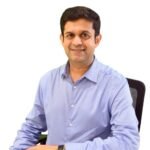
Dr. Sarang Gotecha
Dr. Sarang Gotecha is a leading brain & spine surgeon in Pune, offering advanced care for complex neurological and spinal conditions. With strong academic credentials (MBBS, MS, MCh Neurosurgery) and years of surgical experience, he is committed to delivering precise, safe, and patient-focused treatments.
- Expert in brain tumor, spine & neuroendoscopic surgeries
- Specialized in minimally invasive & skull base surgeries
- Follows an ethical and patient-centric approach
- Available at clinics in Baner, Wakad, and Thergaon (Pune)